
What can be more peaceful than watching a hedgehog snuffle around the grass in search of hidden dinner in the evenings, or admiring the choruses of the songbirds nestle in the trees at the back of your yard? Times are hard for animals these days, with an increasing amount of green spaces being razed for houses, more trees being destroyed than ever before, many being shot, and important sources of water being polluted.
But all is not lost! There are so many ways to help wildlife survive and thrive in your area by providing food, water, shelter and protecting them from predators.
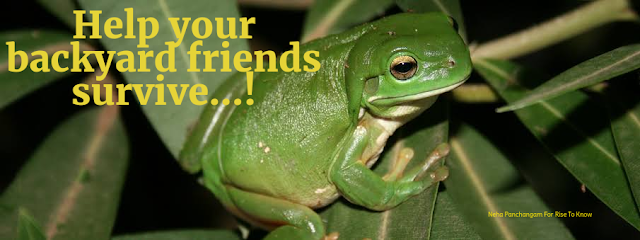
I’m one of those blessed people with backyards where I get to grow plants to my heart’s wish. Our house is so constructed that whenever the overhead tank fills it overflows into the backyard and our backyard connects to our balcony. Yesterday, when I was strolling along the balcony, the overhead tank overflowed and when I was about to switch off the motor, I suddenly spotted a movement around the dripping water. To my surprise they were frogs! I felt bad for them for being thirsty all this time! Frogs don’t drink water through their mouths but absorb it though their bellies (skin) and so the land needs to be damp for that. They will die if their skin dries.
Not only frogs but most of those little creatures of the backyard survive on damp lands and muddy water which make it difficult for them to procure under the extreme temperatures as the land remains dry almost all the time! We all very well help those stray dogs and cats and birds too by feeding them, by keeping bowls filled with water on the compound walls etc. Thanks to all the animal lovers and activists for spreading this awareness. Hope you all are doing it for sure. But we often forget these little creatures in our backyards.
 |
|
A grasshopper helping in the process of pollination, image courtesy: Asian Scientist Magazine
|
All we can do to help these little ones survive is to damp your backyard every evening and morning with the help of a hose. This will create small pits of water here and there which will help the oriental garden lizards etc, to survive. We can also damp the ground in front of our houses and under trees which will invite stray dogs and cats to rest there. Also, this damping reduces the risk of reptiles coming out of their underground homes only if you make sure to damp the ground every day!
Why should we even need to think of helping them???
In return for providing a safe space for animals, you will work with an inspiring feeling that accompanies a close encounter with an elusive, beautiful creature that you may not have had the chance to really appreciate previously. Well, this won’t be a free service since all of them contribute to our ecosystem. New painkillers and antibiotics have been created due to research on the substances frogs secrete through their skin. Being herbivorous, grasshoppers return nutrients to the earth, which in turn act as fertilisers.
All of them play a major role in the ecosystem by acting as both prey and predator for the continuity of the food chain and it is our part to protect them.
Five very effective ways to turn your garden into a heaven for wildlife
Set up a feeding station
 |
|
Image courtesy: Flickr
|
Providing a consistent source of food all year round for the type of animal you wish to attract is a sure-fire way of convincing them that your garden is the best place to be! Feeding during the winter months can be the difference between life and death for a hungry animal, but it is just as beneficial to feed during the summer too when the animals are rearing young and need to keep their energy up as they travel to and fro from their nests.
Provide water
 |
|
Image courtesy: Flickr
|
Just as important as providing food throughout the year for hungry animals, a source of water should also be provided. This can be in the form of an elaborate bird bath or a humble saucer. Dishes of different widths and different heights will benefit the widest variety of animals-a bird bath will encourage not only birds to drink and bathe, but also squirrels, and a bowl placed on the ground will quench the thirst of rabbits, hedgehogs, badgers etc. Remember to replace drinking water daily, and clean bowls and baths with disinfectant when you scrub your feeders.
Don’t fence them out!
If you want to see more wildlife in your garden, be sure to make it accessible. Hedgehogs are becoming increasingly rare in parts of Britain, and one of the biggest reasons for their decline is a lack of space to live and roam due to the abundance of fences, walls and other barriers. A hole dug under the fence, or made in a brick wall, just big enough for a small animal to squeeze through, can really make a difference to their survival.
Have a wild corner
 |
|
Image courtesy: Flickr
|
Consider leaving a patch of garden undisturbed to help support wildlife. Adding branches, logs, dead wood, wooden pallets and similar structures in a pile in one corner will provide a home for insects and small animals such as mice, hedgehogs, slow worms and even frogs.
Get the neighbours involved
If your neighbours are also eager to see more wildlife in their gardens, band together to make a larger safe space for animals. Linking gardens is hugely beneficial to wildlife. No matter what animal you are hoping to see more of, it never hurts to have amicable neighbours, who may be convinced not to leave out harmful poisons with a bit of friendly education, or leave a dish of water out for thirsty creatures…
How to attract new animals to your backyard?
Put up nesting boxes

Nesting boxes will encourage birds to breed in your garden. Different types of birds favour different types of boxes. Put up bird boxes where they are sheltered from the elements and install before spring so that you do not disrupt the breeding season.
Grow wildflowers
 |
|
Image courtesy: BBC
|
Butterflies and bees are drawn to an area of wildflowers. Buddleia is a particular favourite of butterflies, and native species with an open structured flower are good for attracting bees.
With all this happening around you can keep an eye on what is going on in your nesting boxes using purpose-built surveillance cameras and live longer and happier with those memories…!
Be cautious!!
Outdoor pets, both cats and dogs can be a grave threat to backyard birds. Not only may pets hunt or stalk birds, but they can disrupt nests, dig up habitat, damage feeders and generally make birds feel unwelcome. Keep birds safe!!!
Happy life saving!!!
Do share your thoughts on saving wildlife and the tips and tricks you know that you would like to share with the world at admin@risetoknow.com You can also write to us on how far we have been successful in inspiring YOU! Thanks for reading!





Leave a Reply